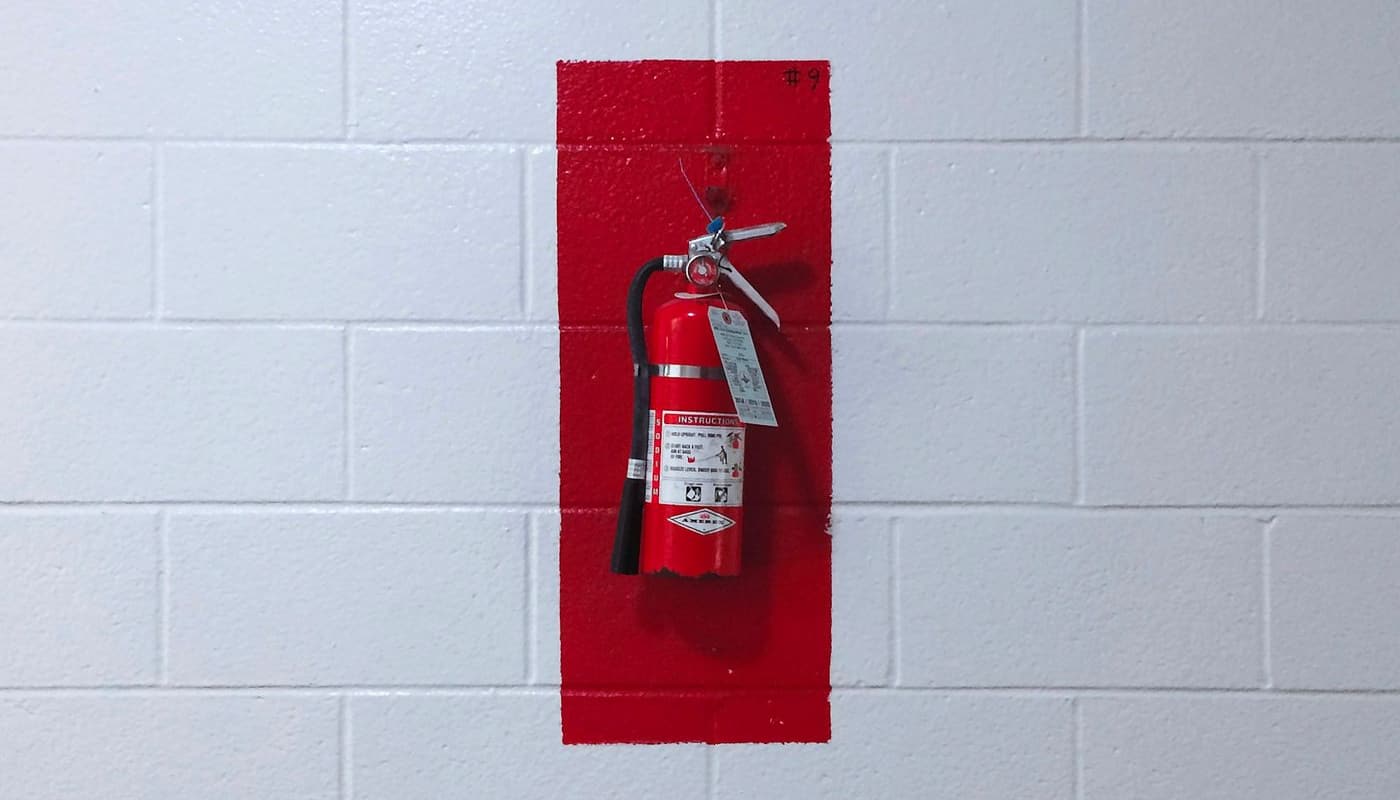
Photo by Billy Joachim on Unsplash
Sponsored content. This article was supplied by a third party and includes links to a commercial service.
Energy companies are built on continuity. Whether a business explores, produces, trades, transports or services energy, its offices and support buildings need to keep running every day of the year. Trading desks watch markets, control rooms monitor operations and engineers rely on drawings, data and records that cannot be replaced overnight.
That is why a failed fire alarm or an impaired sprinkler system is more than an inconvenience in this sector. It is a risk to people, to information and to the continuity that clients and regulators expect. A fire watch gives these organizations a way to stay in operation safely while their protection systems are repaired, and this article looks at how The Fast Fire Watch Company handles those moments.
Three outages, three different problems
The simplest way to see how a fire watch helps is to look at the kinds of outages that energy-sector facilities actually face. In a state where oil, gas, wind and utilities all have a presence, companies in the capital region often turn to The Fast Fire Watch Company in Oklahoma City, OK when a building’s alarm or suppression equipment has to come out of service while staff are still at their desks.
Scenario one: the headquarters tower. A multi-storey office building is replacing its fire alarm panel. For several days, detectors on some floors are disconnected while contractors work. Hundreds of employees still arrive each morning. The building needs patrols on every occupied floor, particularly corridors, stairwells and mechanical rooms, until the new panel is tested and accepted.
Scenario two: the operations center. A control room or monitoring center runs around the clock, with staff on shift at all hours. The room is full of screens, cables and electronic equipment, and the surrounding area includes server rooms and battery backups. When the suppression system for the area is shut down for service, a guard must keep watch through the night as well as the day.
Scenario three: the field office and yard. A smaller office building sits beside a storage yard or workshop. Contractors come and go, vehicles park close to the building, and materials are stacked nearby. A sprinkler leak forces part of the system offline, and the owner needs to cover both the building and its surroundings until the repair is complete.
How The Fast Fire Watch Company handles an energy-sector outage
The Fast Fire Watch Company names energy, utilities and telecom among the industries it serves, and it has pages for energy facilities and for refineries and petrochemical sites. The company says it has arranged fire watch in all 50 states since 2019, so a firm with offices and field locations in several states can use one provider.
On the practical side, the company says its goal is to get a guard on site in under three hours, that a live dispatcher usually answers within about 15 minutes, and that guards arrive pre-briefed with access details and any fire marshal orders. For a building with controlled areas, that briefing is the step that keeps a patrol from wandering into places it should not be.
Records follow the usual pattern: patrol times, the guard on duty, conditions observed, who was notified and what was done, organized for shift handoffs, the building file and review by the fire authority. Energy companies are used to audits, and the company’s logs are built to be handed over.
What makes energy-sector offices different
Information adds another dimension. Geological data, engineering records, contracts and financial documents may be kept on paper as well as on servers. A fire that destroys them can cost months of work, and some items cannot be recreated at all. Insurers and regulators know this, and they expect owners to protect such assets even when a system is out of order.
Staying within the building’s limits
It is important to be clear about what a fire watch does and does not do. Guards in an office setting observe, record and report. They do not operate equipment, enter restricted process areas or take on duties that need specialist training. If a building includes sensitive or hazardous areas, the owner’s own technical staff stay responsible for them, and the guard’s role is to coordinate and communicate.
That clear division of responsibility protects everyone. The guard knows exactly where the route ends, the facility team knows who to call, and the written log shows what was checked and when.
What a patrol covers
The route depends on the building, but for a typical energy-sector office it usually includes:
- Occupied floors and corridors. Looking for smoke, burning smells, blocked exits and propped fire doors.
- Electrical and server rooms. Checking from permitted positions for heat, unusual noise or damaged cabling.
- Records and storage rooms. Watching for stacked material close to heat sources or lighting.
- Kitchens and break areas. Appliances left on, overloaded sockets and waste containers.
- Mechanical rooms and roofs. Air handling equipment, boilers, chillers and generators.
- Exterior and parking areas. Vehicles, stored materials and anything near the building line.
After each round, the guard records the time, the areas covered and any observations. If a hazard is found, the guard raises the alarm and contacts emergency services, then informs the facility contact. The log becomes part of the building’s compliance file.
Speed, schedules and shifts
Equipment failures do not wait for a convenient moment. A detector fault or a burst pipe can appear on a Friday evening, and the building may need coverage before staff arrive on Monday. In those cases, Emergency Fire Watch Security allows guards to start quickly while repairs are organized.
Longer projects need planning. A panel replacement, a retrofit of a suppression system or a major renovation can take weeks, and the building may be impaired the whole time. 24/7 Fire Watch Guard Services allow an operation to keep running through every shift, including nights, weekends and holidays, without gaps in the record.
Paperwork that stands up to scrutiny
Energy companies are used to audits, and a fire watch should be treated the same way. Fire officials may ask for the patrol logs, insurers may want proof that coverage was in place, and internal risk teams may review the incident after the work is finished. Clear records, kept in a consistent format, make those conversations simple.
Owners should also remember to notify their insurer and, where required, the local fire authority at the start and end of an impairment. Fire Watch Services can help with the documentation, but responsibility for notification stays with the owner or manager of the building.
Consistency across locations
Many energy firms run offices in several cities, with a head office in one place and operating bases in others. A company with a main office in the capital and a regional site served by The Fast Fire Watch Company in Tulsa, OK can ask for the same reporting format and the same standards at each one. That makes it easier for risk managers to compare sites and spot patterns.
Questions to settle before an outage
The best time to prepare is before something breaks. Facility managers can list which buildings carry the highest risk, identify who approves a fire watch, and check what the local authority requires. They can also agree in advance on access rules, escort arrangements and emergency contacts, so a provider can begin without delay.
Continuity is the point
The energy sector depends on steady operations, and its offices are part of that chain. A fire watch is a modest step that protects people, records and business continuity while a protection system is repaired. When an outage is handled calmly, with trained people on patrol and a clear written record, the organization can keep working and the repair stays what it should be: a short interruption, not a crisis.